
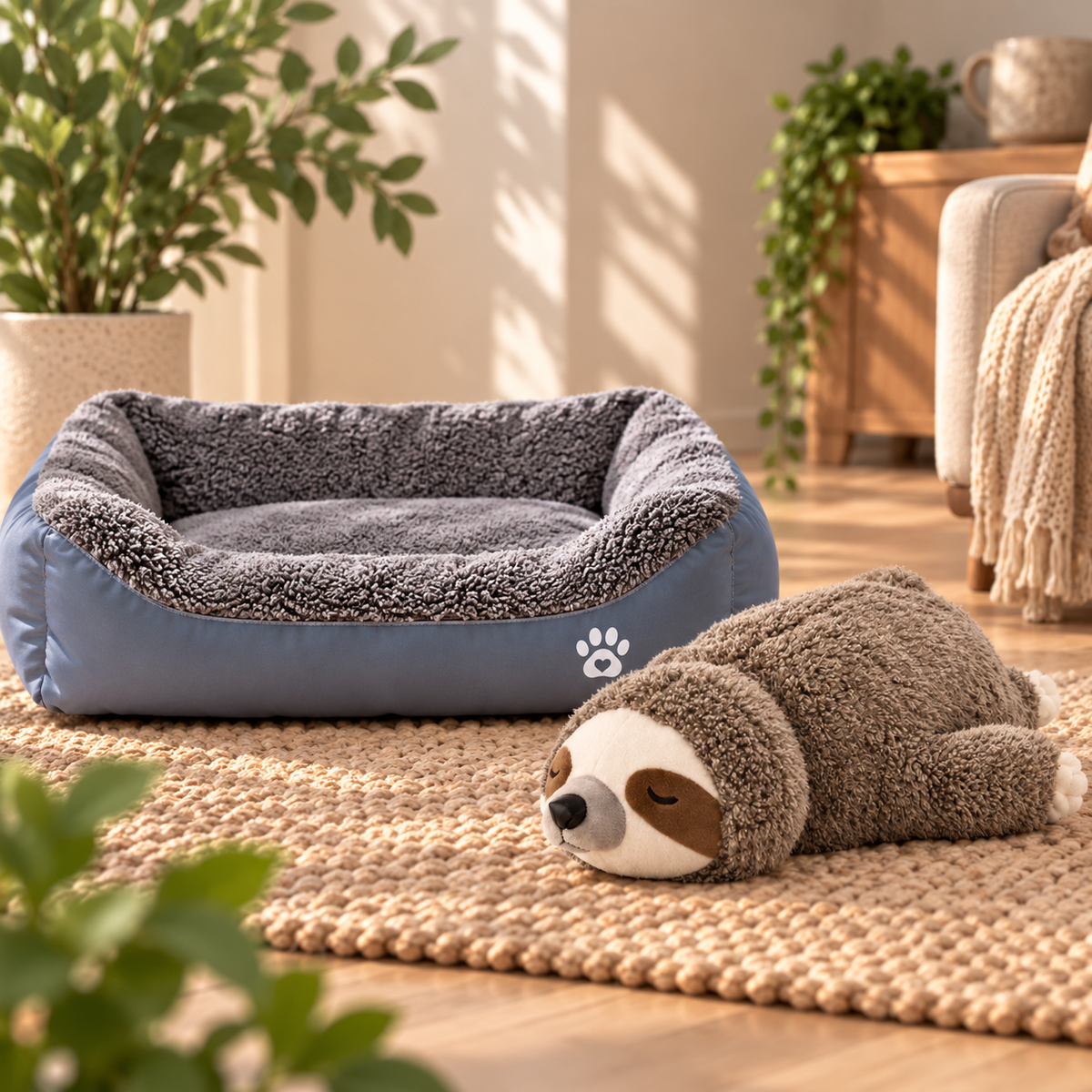
A consistent evening routine can help a dog understand when the household is winding down. The aim is not to force sleep, but to make the last part of the day predictable and comfortable.
Keep the final hour gentle
Try to avoid introducing highly exciting games immediately before bedtime. Some dogs settle well after a short sniffing activity, a gentle toilet break and a little quiet time near the family.
Choose a comfortable sleeping place
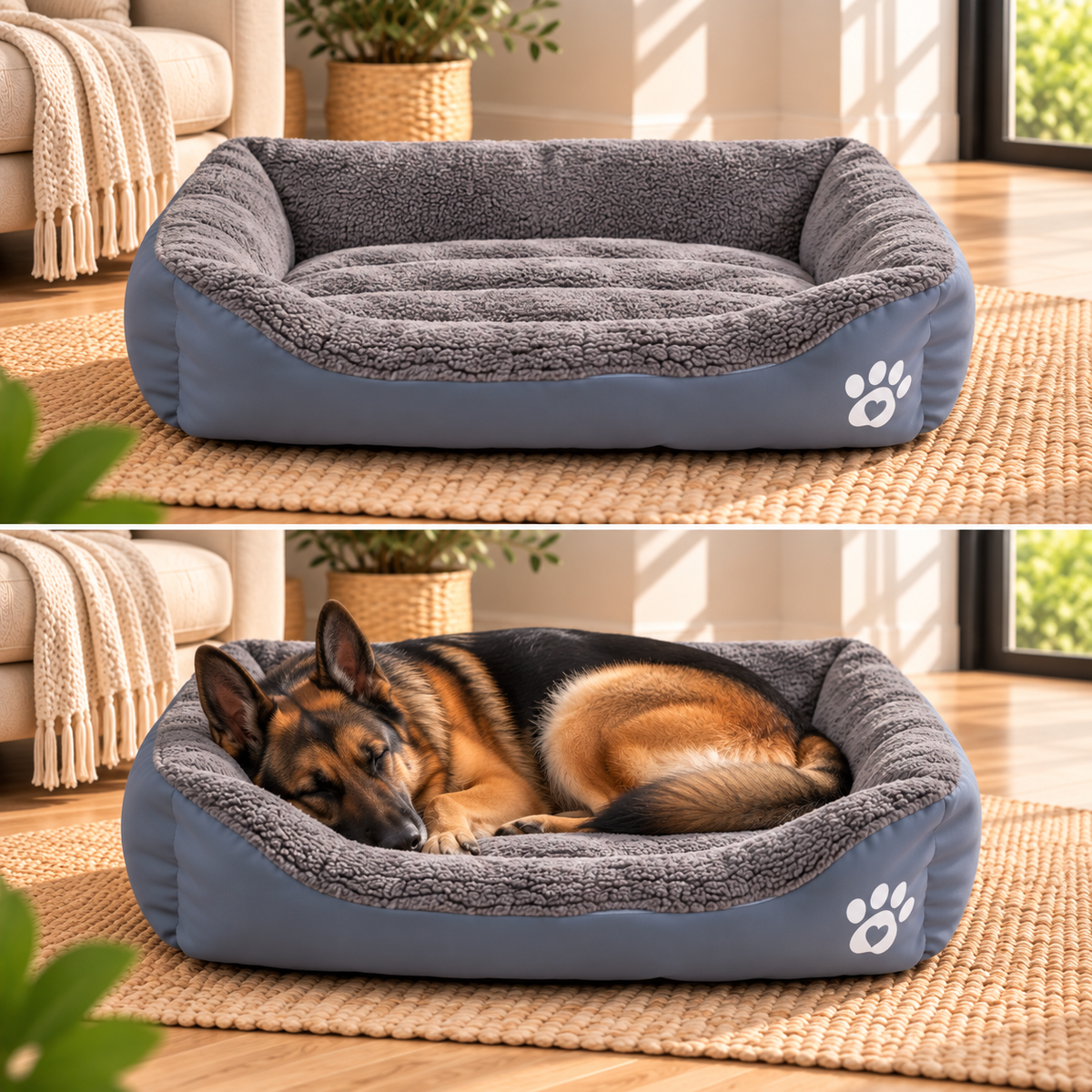
Watch where your dog naturally rests. Their sleeping area should be away from draughts, excessive heat and busy walkways. Make sure the bed is large enough for their usual sleeping positions. Explore Barklore's Rest & Comfort collection for bedding options, and check dimensions before choosing.
Make the routine predictable
Use a similar sequence each night: last outdoor break, fresh water available, lights lowered and a calm invitation to settle. Consistency matters more than a rigid minute-by-minute schedule.
Respect individual preferences
Some dogs like a quiet room; others prefer sleeping close to their people. Puppies, senior dogs and dogs with medical needs may need different arrangements. Avoid assuming that every dog should sleep in the same place or at the same time.
What if your dog will not settle?
Check practical needs first: a toilet break, temperature, noise and comfort. Sudden restlessness, pain, panting or changes in sleep deserve veterinary advice rather than a new bed alone.
Simple evening checklist
- Offer an appropriate final toilet break.
- Keep the sleeping space clean and comfortable.
- Reduce loud play and household disruption.
- Leave fresh water accessible.
- Allow your dog to settle without repeated interruptions.
A calm routine is built through repetition. Keep it simple and adjust it to the dog in front of you.
Practical example: How to Create a Calm Bedtime Routine for Your Dog
Try a consistent final sequence: toilet break, water, quieter lighting and access to familiar bedding. Avoid restarting energetic games immediately before sleep.
What to check before you finish
If your dog repeatedly gets up, check for noise, draughts, discomfort or toileting needs. Sudden sleep changes or persistent distress deserve veterinary advice.

Leave a comment
This site is protected by hCaptcha and the hCaptcha Privacy Policy and Terms of Service apply.