
Choosing a safe dog toy is less about finding a label that says “tough” and more about matching the toy to the individual dog. Size, chewing style, age and the way your dog plays all matter.
Choose the right size
A toy should be large enough that your dog cannot easily swallow it whole. Very small toys may be unsuitable for larger dogs, while oversized toys can be frustrating for small dogs to carry or manipulate.
Match the toy to your dog’s play style
Some dogs gently carry soft toys; others immediately try to pull them apart. Some love food puzzles, while others prefer nudging or sniffing. The safer choice is one that suits how your dog actually plays rather than how you hope they will play.
Inspect toys regularly
Check for loose pieces, exposed stuffing, sharp edges, splits or sections that are becoming small enough to swallow. Remove a damaged toy rather than waiting for it to fail completely.
Supervise new toys
When introducing something new, watch how your dog uses it. Supervision helps you learn whether they lick, chew, tear, roll or try to swallow parts. That information makes future toy choices easier.
Use enrichment toys appropriately
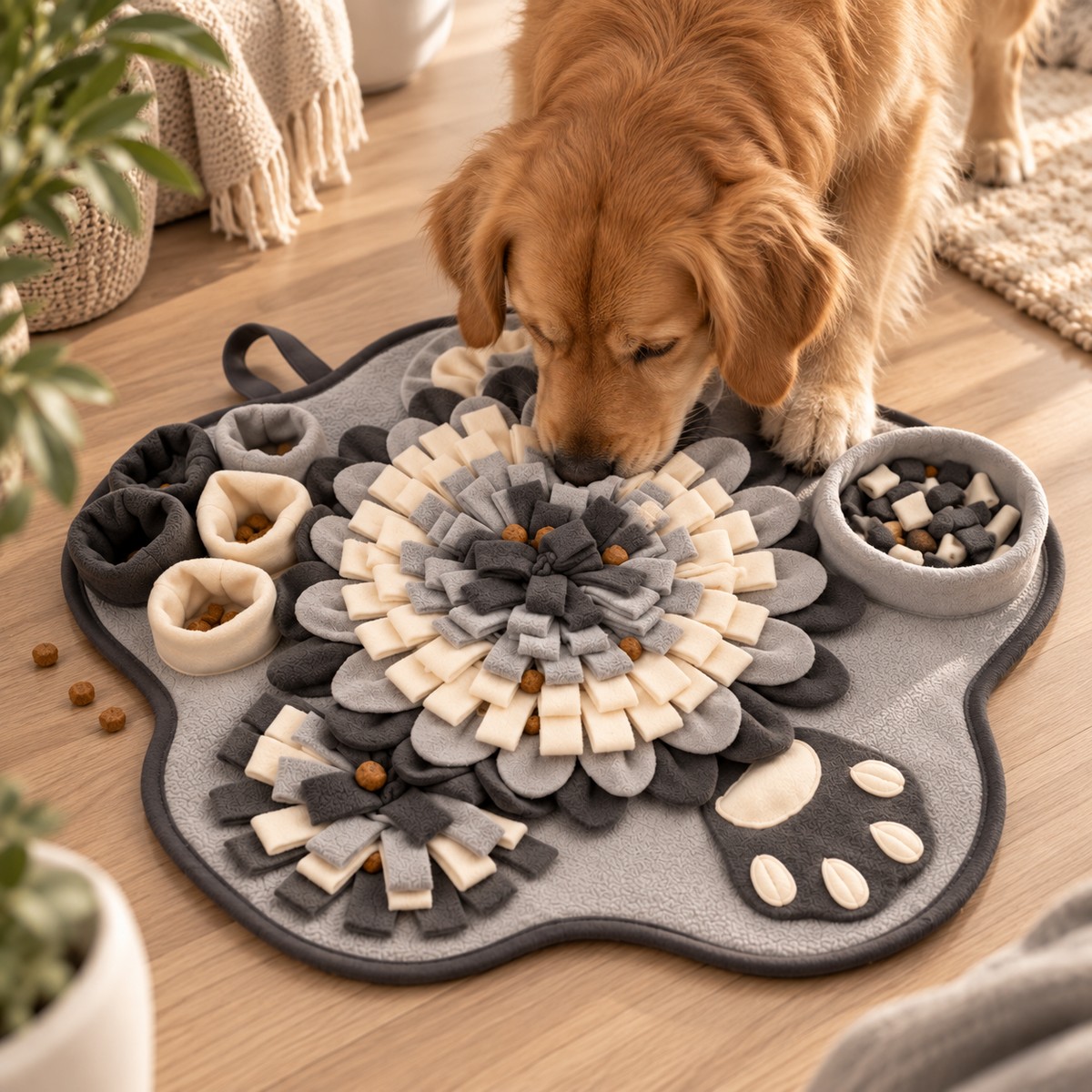
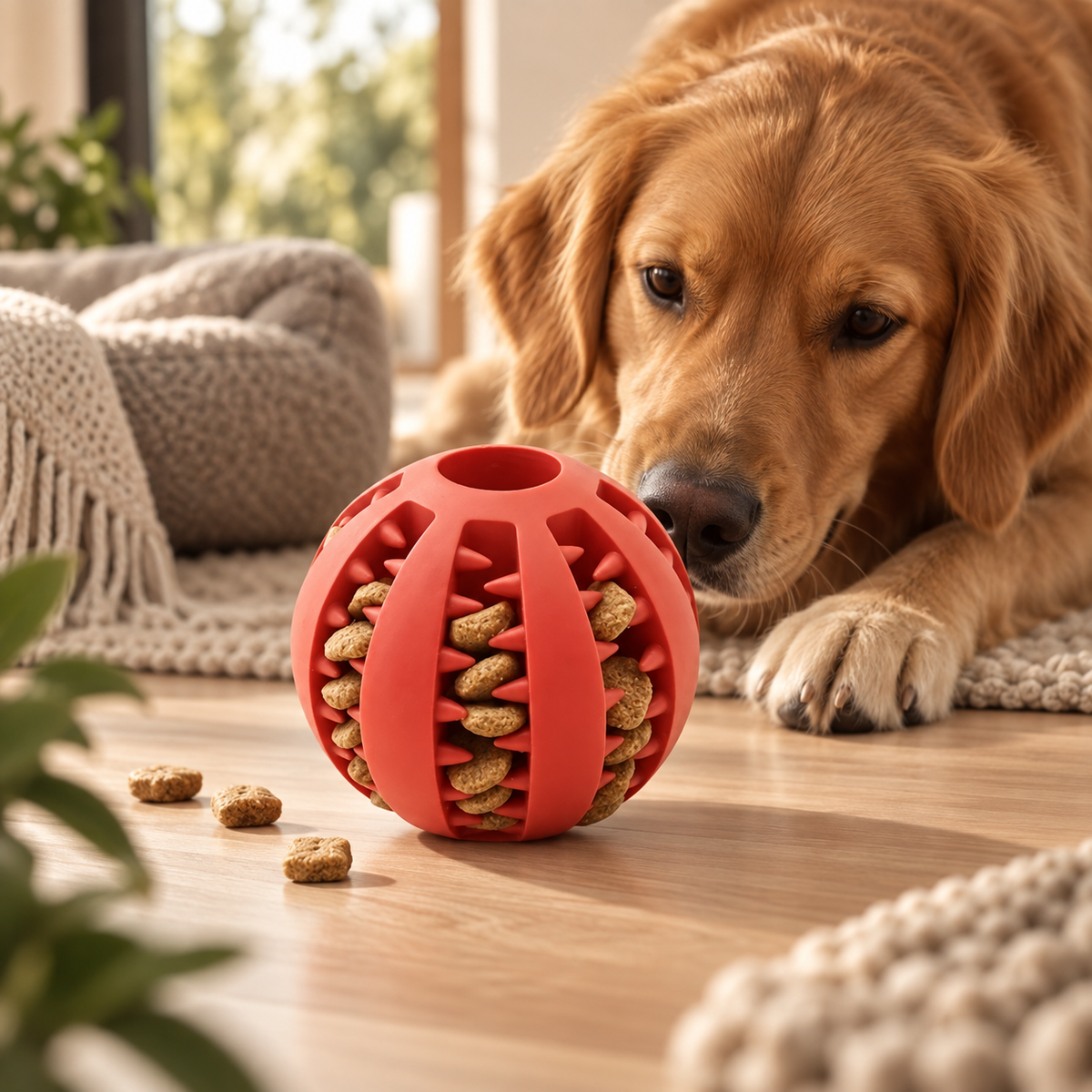
Food-based enrichment can be a useful alternative to constant chewing. The Forage Mat, Treat Tumbler and Enrichment Ball all encourage different types of interaction. Always introduce them under supervision and stop use if the item becomes damaged.
Soft toys need checking too
A comfort toy can be ideal for a dog that likes carrying or cuddling, but inspect seams and fabric frequently. The Comfort Companion — Pup and Comfort Companion — Sloth are intended for gentle comfort and play rather than destructive chewing.
Consider your dog’s age and health
Puppies, senior dogs and dogs with dental issues may have different needs. If your dog has known dental or medical problems, ask your vet which types of chewing and play are appropriate.
Rotate rather than overload
A smaller number of suitable toys, rotated regularly, is often more useful than a large pile of toys that are ignored. Rotation also gives you an opportunity to inspect each item before it returns to use.
For more guidance, read What Toys Are Best for Bored Dogs?.
Bottom line
No dog toy is completely risk-free. Choose the right size and type, supervise new items, inspect them regularly and remove anything damaged. Safe play depends as much on how the toy is used as on the toy itself.

Leave a comment
This site is protected by hCaptcha and the hCaptcha Privacy Policy and Terms of Service apply.