

A dog paw washer can make post-walk clean-up much quicker, but the best results come from using it gently and consistently. The goal is not to scrub your dog’s paws aggressively. It is to loosen mud, grit and surface dirt, rinse between the pads, and make drying easier before your dog walks through the house.
How to use a dog paw washer step by step
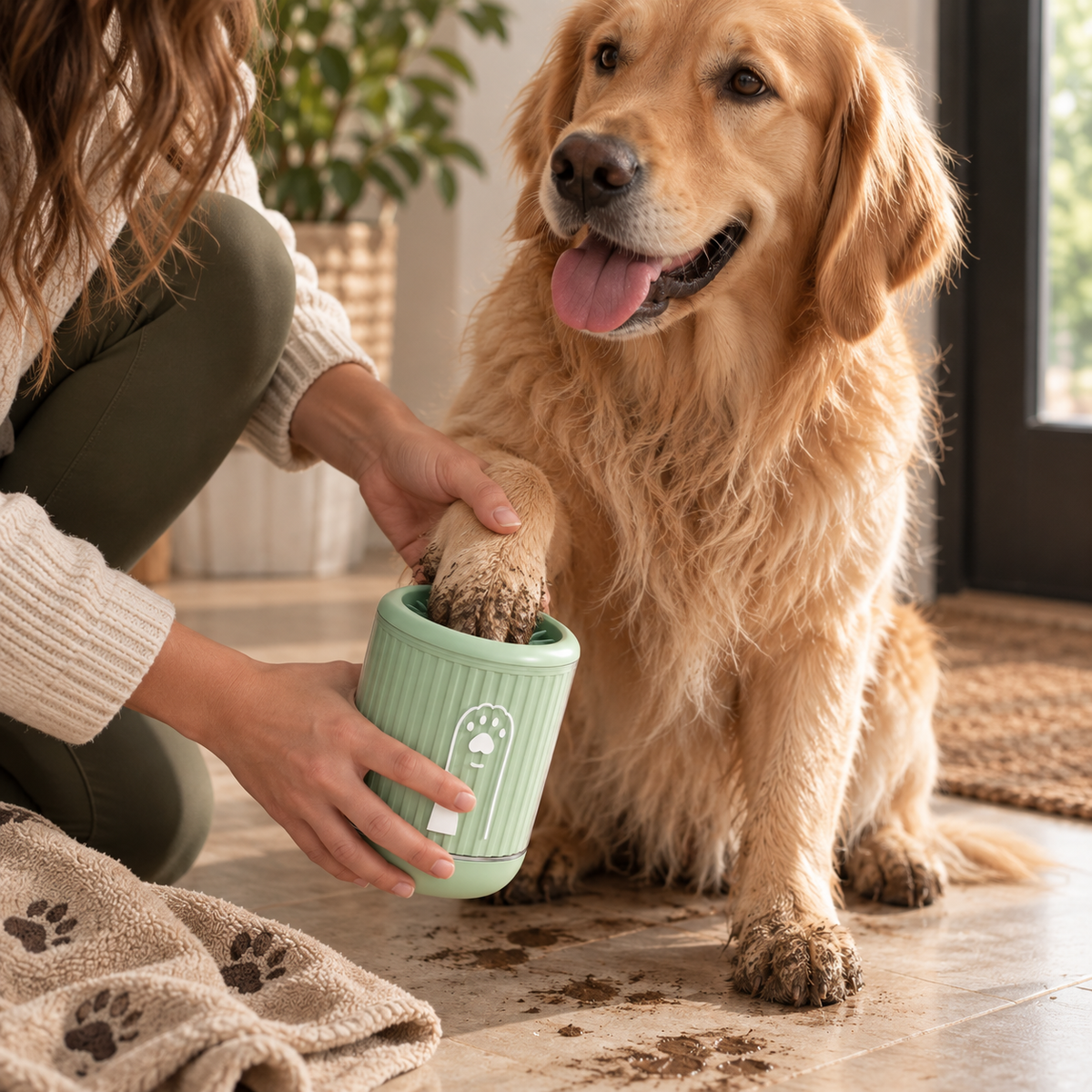
Start by filling the paw washer with enough lukewarm water to cover the dirty part of the paw. Avoid very hot or very cold water. If your dog has heavily soiled paws, remove large clumps of mud first with a towel so the water inside the washer stays effective for longer.
- Introduce the washer calmly. Let your dog see and sniff it before you lift a paw.
- Place one paw inside gently. Keep the leg in a natural position rather than pulling it forwards.
- Rotate the washer slowly. A few gentle turns are usually enough for the soft internal cleaning surface to work around the paw.
- Lift the paw out and check it. Pay attention to the pads and between the toes.
- Dry thoroughly. Use an absorbent dog towel, especially in autumn and winter when damp paws can stay cold.
- Repeat with the remaining paws. Change the water if it becomes very muddy.
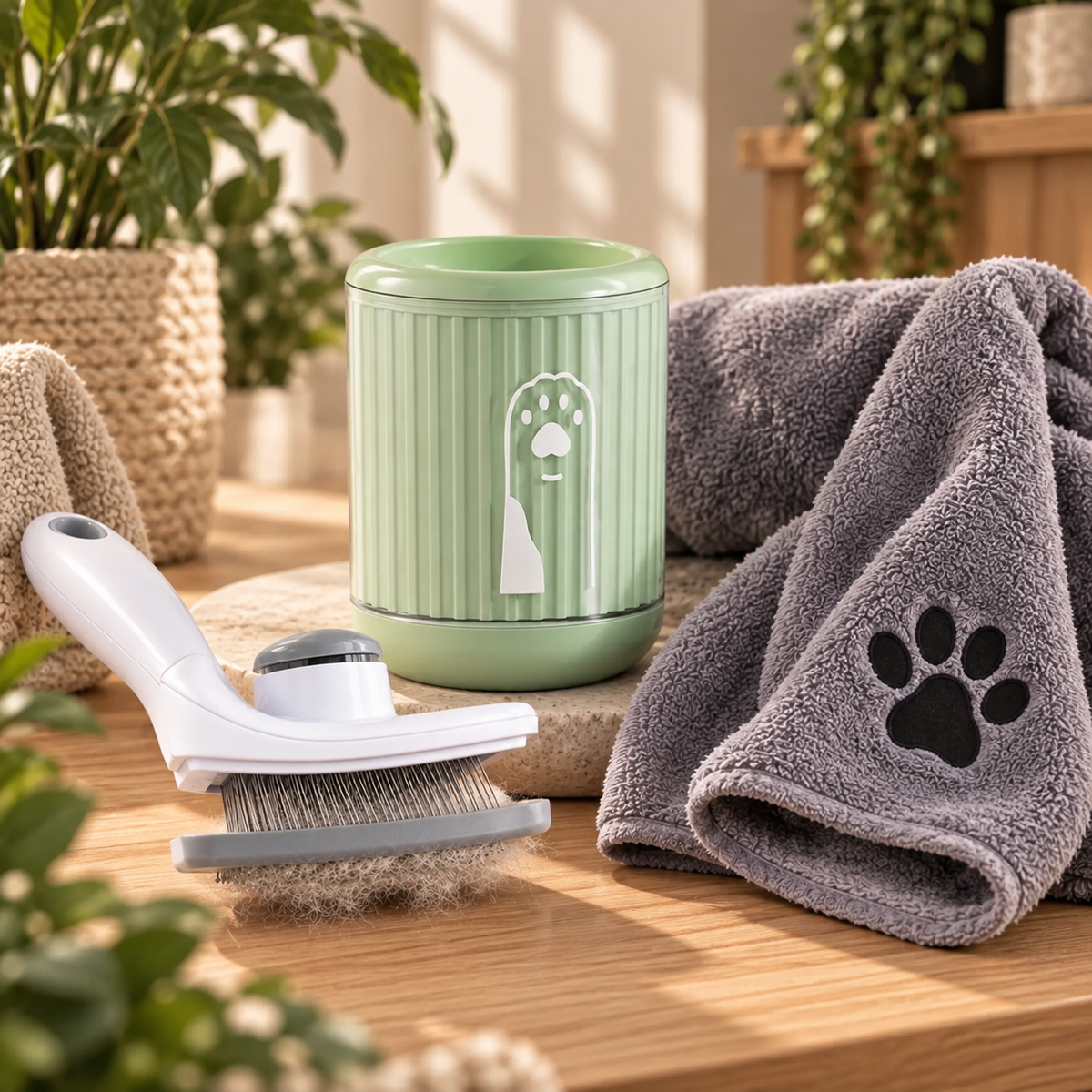
The Barklore Paw Wash is designed to make this routine straightforward after everyday walks. For owners who want the complete clean-up setup, the Post-Walk Set combines useful post-walk essentials in one place.
How much water should you use?
You only need enough water to surround the paw comfortably. Overfilling can make the washer messy, while too little water reduces the rinsing effect. Lukewarm water is normally the most comfortable choice.
Should you add shampoo?
For ordinary mud and dirt, plain water is usually enough. Frequent use of shampoo or strong cleansers can be unnecessary and may dry the skin. If your dog has a skin condition, cracked pads or ongoing irritation, follow advice from your vet rather than adding products routinely.
How do you get a nervous dog used to a paw washer?
Build the habit gradually. Touch the washer to the paw without inserting it, reward calm behaviour, then progress to a brief dip. Keep early sessions short. Dogs usually respond better when paw cleaning becomes a predictable part of coming home rather than something that only happens when they are extremely muddy.
Do you need to dry paws afterwards?
Yes. Washing removes mud, but drying finishes the job. Damp fur between the toes can stay wet for longer than expected. Keep a dedicated towel near the door; the Barklore Drying Towel is useful for paws, legs and coats after wet walks.
When should you use a paw washer?
It is most useful after muddy fields, wet woodland paths, sandy walks and winter routes where dirt collects around the pads. On a dry pavement walk, a quick visual check or wipe may be all that is needed.
If muddy paws are a regular problem, read our guides on how to clean muddy dog paws after a walk and how to stop muddy paw prints around the house.
Final tip
The best paw-cleaning routine is the one your dog accepts and you can repeat consistently. Keep the washer, fresh water and towel close to the entrance you use after walks. A simple two-minute routine can prevent mud being carried through the rest of the home.

Leave a comment
This site is protected by hCaptcha and the hCaptcha Privacy Policy and Terms of Service apply.