
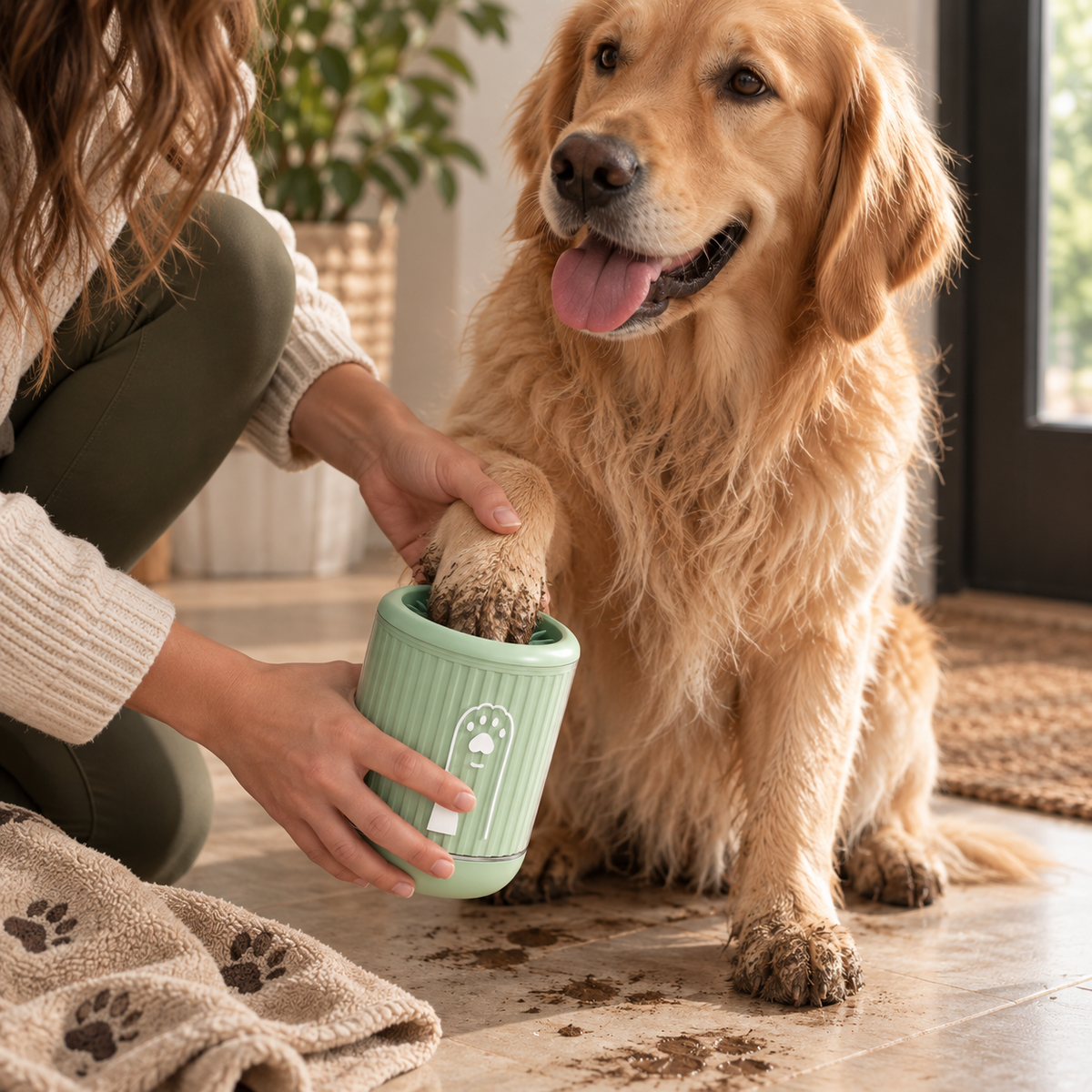
A muddy winter dog walk can be great fun outside and considerably less fun once you reach the front door.
Wet paws, damp fur and mud on the floor can quickly turn a normal walk into a cleaning job. The easiest solution is not to avoid muddy walks altogether, but to create a simple routine for the first few minutes after you get home.
1. Stop the mud at the door
Before your dog walks through the house, pause in an entrance area where you can deal with the worst of the dirt.
Keeping a towel and paw-cleaning equipment near the door means you do not have to leave your dog standing there while you search for supplies.
2. Check the paws
Take a quick look at each paw for obvious mud, grit, leaves or other debris picked up during the walk.
Dogs that have walked through very muddy areas can bring home a surprising amount of dirt between and around the paws, so dealing with it immediately helps protect your floors and makes the dog more comfortable.
3. Clean muddy paws
For light dirt, a simple wipe may be enough. When paws are properly muddy, rinsing them can be much more effective.
The Barklore Paw Wash provides a convenient way to clean individual paws before your dog comes further into the house.
Use clean water and work through one paw at a time. There is no need to turn every muddy walk into a full bath.
4. Dry paws properly
Once the visible mud has been removed, dry the paws rather than leaving them wet.
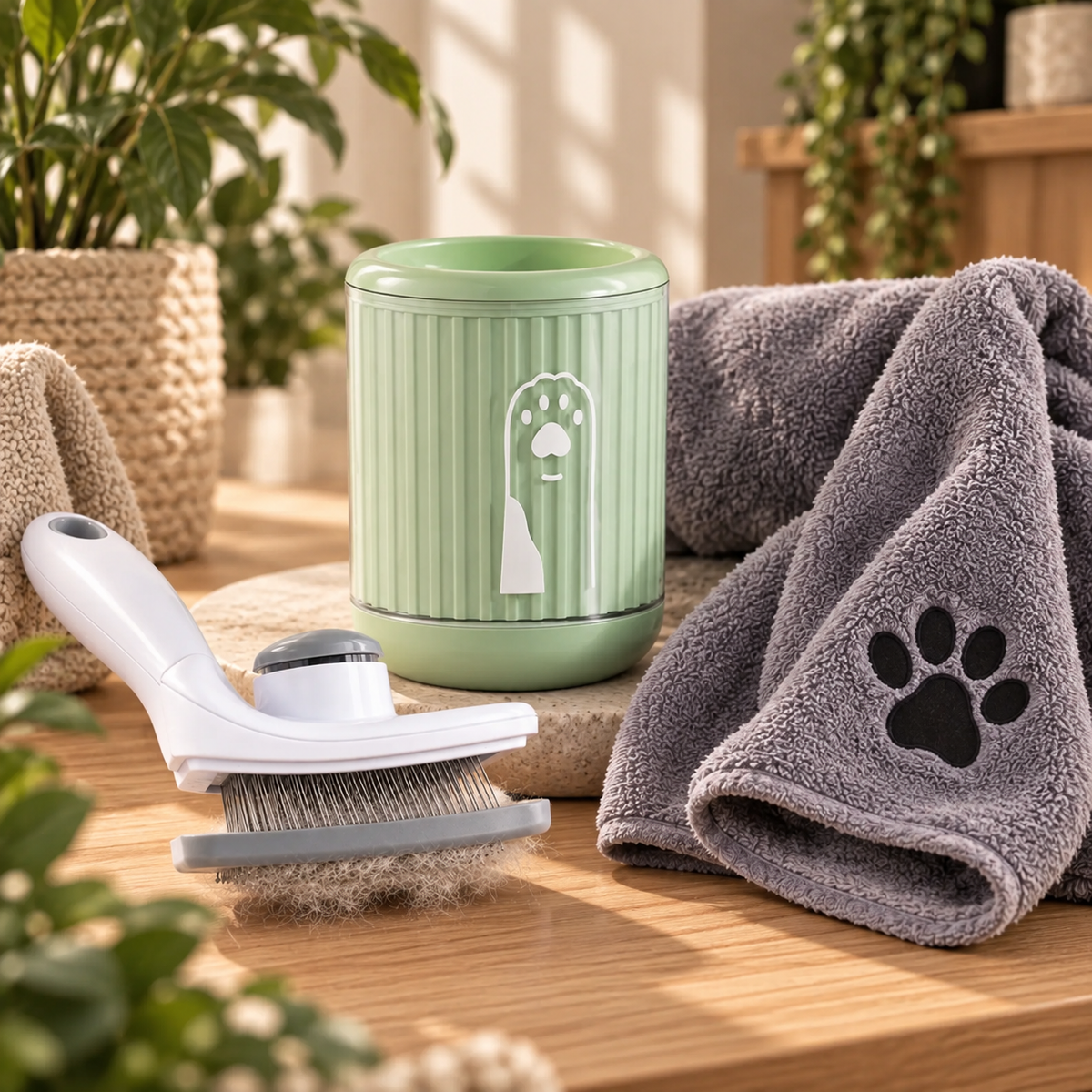
A dedicated dog towel makes this easier and keeps your household towels separate from muddy-walk duty. The Barklore Drying Towel can be kept near the entrance ready for exactly this situation.
5. Dry the legs and coat
On rainy days, mud often reaches much further than the paws. Check the lower legs, underside and any longer fur that may have collected water or dirt.
Gently towel away excess moisture. If the coat is only damp rather than heavily soiled, this can often be enough after an ordinary walk.
6. Deal with loose dirt and coat debris
Once appropriate for your dog's coat, routine brushing can help remove loose debris and keep fur manageable.
The Barklore Self-Cleaning Brush is designed for straightforward everyday grooming and can form part of your post-walk routine.
7. Put wet walking gear somewhere sensible
Leads, towels and other wet items can create their own mess if they are dropped on the floor.
Choose one place for wet walking equipment so it can dry without spreading water or mud around the house. A simple basket, hook or washable mat near the entrance can make a difference.
8. Give your dog somewhere comfortable to settle
After a cold or wet walk, many dogs are ready to rest. Once they are clean and dry, giving them their usual comfortable resting area helps mark the end of the walk.
If you are looking for a dedicated rest space, explore The Nest or the wider Rest & Comfort collection.
Should you bathe your dog after every muddy walk?
Usually, a muddy walk does not automatically mean a full bath is needed. Often the dirt is concentrated around the paws, legs and underside, so targeted cleaning is quicker and more practical.
If your dog has rolled in something unpleasant, is unusually dirty, or needs specific skin or coat care, follow the grooming advice appropriate for your dog.
Create a dedicated post-walk station
If winter walks regularly end in mud, it is worth keeping the essentials together:
- paw-cleaning equipment
- a dog towel
- a grooming brush
- waste bags and walking accessories
- a washable entrance mat
The Barklore Post-Walk Set combines key Barklore cleaning and grooming products for owners who want a ready-made setup.
A five-minute routine can save a much bigger clean-up
The goal after a muddy winter walk is simple: remove the dirt before it travels through the house.
Clean the paws, dry your dog, deal with wet equipment and then let everyone relax. Browse the Barklore Walk & Care collection for practical everyday dog-walking and clean-up essentials.

Leave a comment
This site is protected by hCaptcha and the hCaptcha Privacy Policy and Terms of Service apply.