
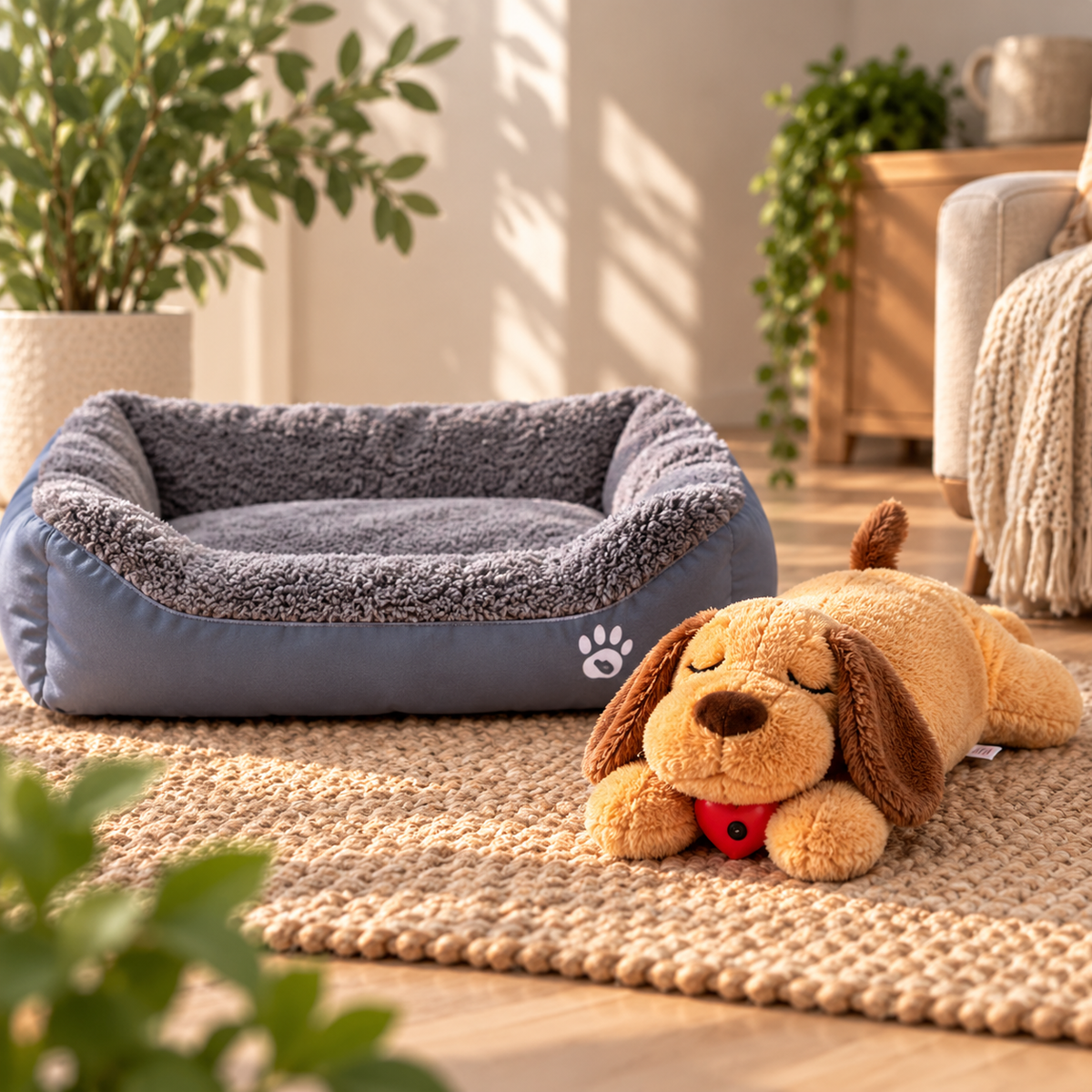
Dogs often change position while resting, and in many cases it is completely normal.
Just like people, dogs move to get more comfortable, adjust their temperature, respond to sounds or shift between lighter and deeper stages of sleep.
Comfort
The simplest reason is comfort.
A dog may curl up, stretch out, roll onto their side and then move again later.
The surface underneath them, the room temperature and how tired they are can all influence position.
Temperature
Dogs often curl up when they want to conserve warmth and spread out when they want to cool down.
If your dog changes from a tight curl to lying fully stretched, temperature may be part of the reason.
Room to move
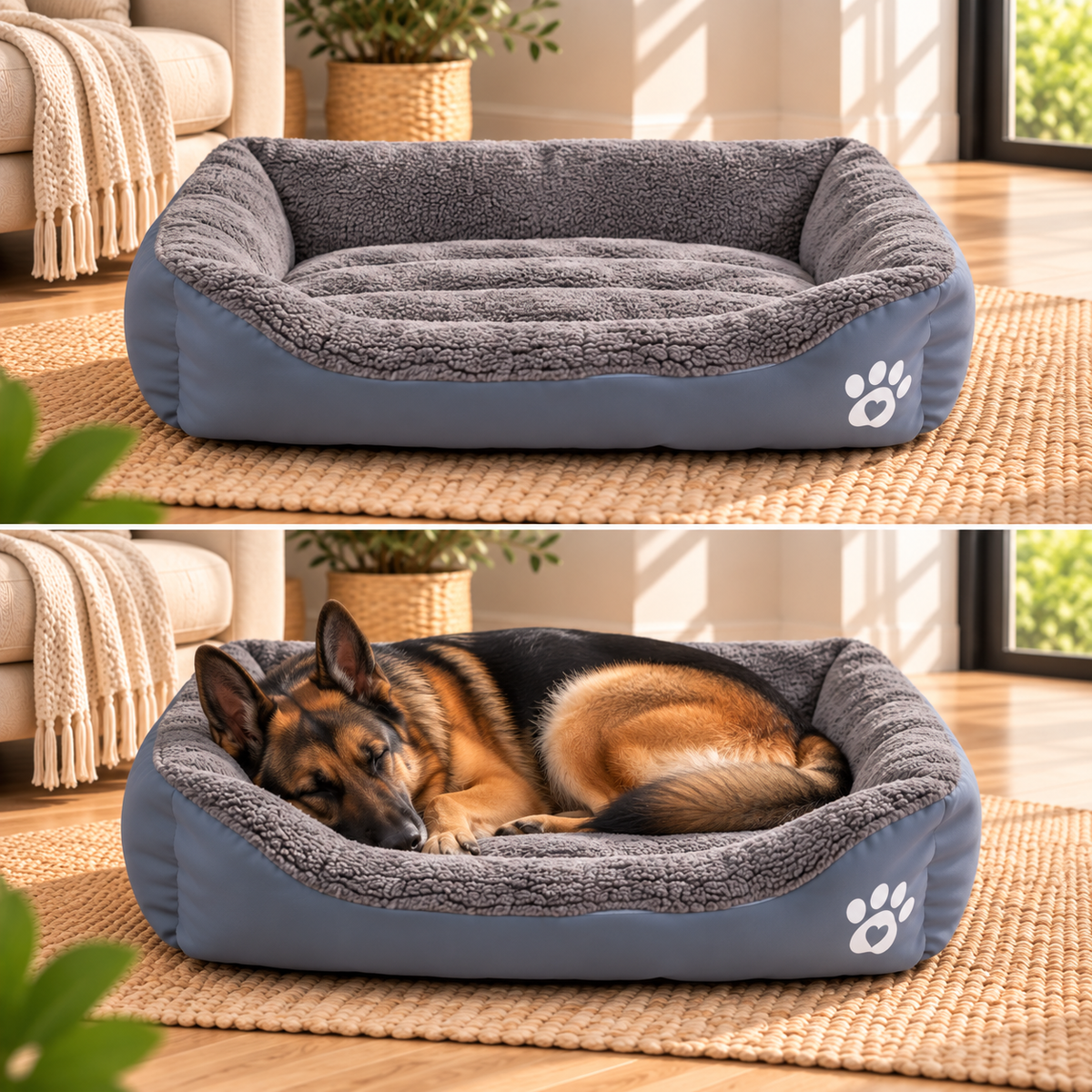
A dog bed that is too restrictive can make repositioning harder.
If your dog regularly tries to stretch and ends up half off the bed, it may be worth checking the size.
A bed such as Barklore's The Nest should still give your dog enough room to move naturally within the sleeping area.
Sounds and household activity
Dogs remain aware of their environment even while resting.
A door opening, somebody walking through the room or another pet moving nearby can be enough to make them lift their head, turn around or resettle.
Different sleep stages
Dogs do not stay in one sleep stage all night.
They may move between lighter rest and deeper sleep, and their position can change as they do.
Occasional twitching, paw movement and position changes are common during sleep.
Surface preference
Some dogs move between a bed and the floor depending on temperature and comfort.
A soft bed may feel best for longer rest, while a cooler floor can become appealing when the room is warm.
This does not necessarily mean they dislike the bed.
When should you pay more attention?
Frequent repositioning can occasionally be a sign that a dog is struggling to get comfortable.
If the behaviour is new, extreme, or accompanied by limping, crying, difficulty lying down, difficulty standing, heavy panting or other signs of discomfort, speak to your vet.
Make the sleeping space easy to use
Your dog's bed should be large enough for them to change position and easy for them to get in and out of.
Some dogs prefer a raised-side bed. Others prefer a flatter surface such as The Cosy Mat.
Watching where and how your dog chooses to rest will tell you a lot.
Changing position is usually normal
Most dogs do not sleep in one perfect pose for hours.
They shift, curl, stretch and resettle as they get comfortable.
The main thing is to make sure they have enough room and a resting place they actually choose to use. Explore Barklore's Rest & Comfort range for different ways to create that space.


Leave a comment
This site is protected by hCaptcha and the hCaptcha Privacy Policy and Terms of Service apply.