

There is no single dog bed style that is best for every dog.
The right choice depends on how your dog sleeps, how much room they need, their age, where the bed will be used and whether they prefer a defined sleeping space or something flatter and more flexible.
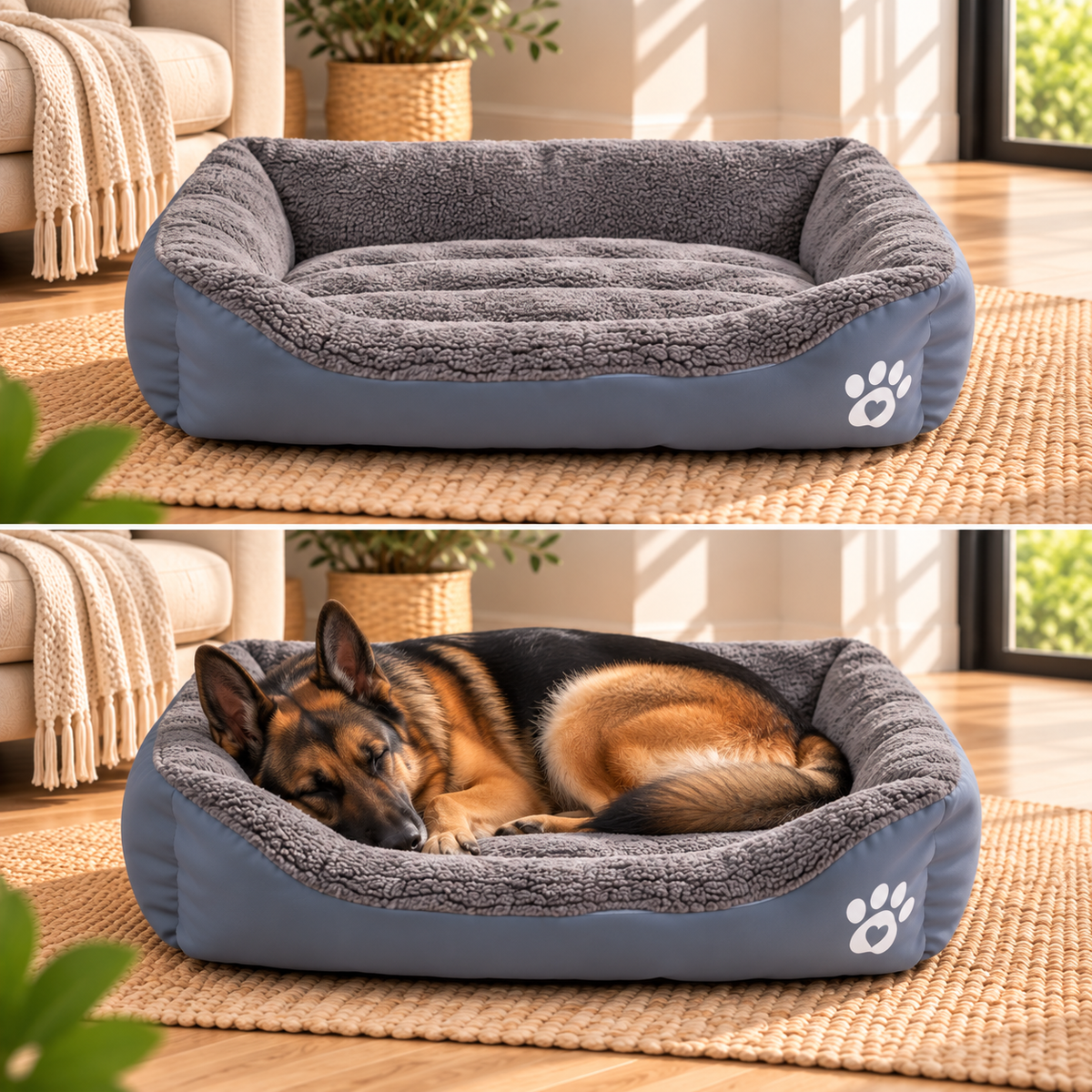
Bolster and raised-side beds
Beds with raised sides are popular because they give dogs something to lean or rest their head against.
They can work especially well for dogs that curl up, nest into corners or like a defined boundary around their sleeping space.
Barklore's The Nest is designed around this kind of cosy, contained rest.
Raised sides are not ideal for every dog, though. Dogs with reduced mobility may find very high sides harder to step over, so accessibility matters.
Flat mats
A flat mat can be a good choice if you want something easy to move between rooms or use in different parts of the home.
They can also suit dogs that prefer to stretch out without being surrounded by edges.
Our The Cosy Mat is a good example of a simpler, portable resting surface.
Deep, cushioned beds
Dogs that enjoy sinking into soft surfaces may prefer deeper padded beds. These can feel especially inviting after long walks or during colder months.
The trade-off is that very soft beds may not suit every older dog if they find it harder to get up from a deeply cushioned surface.
Beds for dogs that stretch out
If your dog regularly sleeps fully extended, surface area should be one of your main priorities.
Measure your dog while lying naturally and make sure the sleeping surface gives enough room for legs to extend without constantly falling off the edge.
Beds for dogs that curl up
Curlers often like sides or bolsters because they provide contact and a stronger sense of a defined resting place.
A closer fit can feel cosier, provided the dog still has enough room to reposition.
What about older dogs?
Older dogs may need easier access, more room and a surface that feels comfortable without being awkward to stand up from.
Think less about labels such as 'senior dog bed' and more about practical factors: edge height, stability, room to turn, and how easy it is for your dog to lie down and get back up.
What about puppies?
Puppies often sleep in a variety of positions and grow quickly.
Choose something that gives them enough space now while allowing for growth. If the bed is slightly larger, familiar blankets and comfort toys can make it feel more secure.
Consider where the bed will live
A main sleeping bed in the living room or bedroom may need to feel more substantial.
A secondary resting place in a home office, hallway or car-friendly setup may work better as a lighter mat.
Many dogs benefit from having more than one comfortable resting spot around the home.
Cleaning matters too
A dog bed is going to collect hair, dirt and everyday smells, so practicality should be part of the buying decision.
The best-looking bed is not necessarily the best choice if it becomes frustrating to maintain.
So which type should you choose?
Choose based on your dog's behaviour rather than trends.
If they curl up and lean against furniture, a raised-side bed may suit them. If they sprawl, prioritise surface area. If they move around the home with you, a lightweight mat can be useful.
You can explore Barklore's Rest & Comfort collection for different ways to create a more inviting place for your dog to settle.


Leave a comment
This site is protected by hCaptcha and the hCaptcha Privacy Policy and Terms of Service apply.